Faith and Aromatherapy: A 5 Minute Caregiver Reset
# Faith and Aromatherapy: A 5 Minute Caregiver Reset
You can reset in 5 minutes without leaving the room. Pull out a personal inhaler, breathe slowly through it four times while you say a short breath prayer, then go back to caregiving. This is not selfish. It is stewardship of the body and heart you were given to do this work. Guardrails matter, so we cover those too.
Why Do Caregivers Need Micro Resets Instead of Long Routines?
Long routines sound nice on paper. A 20 minute bath, a full yoga flow, a quiet hour with a book. Most caregivers do not have that hour, and waiting for it means never resetting at all. A 2023 survey of U.S. family caregivers found that 87% reported experiencing stress or anxiety at some point, and more than half felt it at least weekly. That is not a rare bad day. That is a pattern, and patterns need something you can actually repeat.
A micro reset fits into the cracks of real life. You can do it:
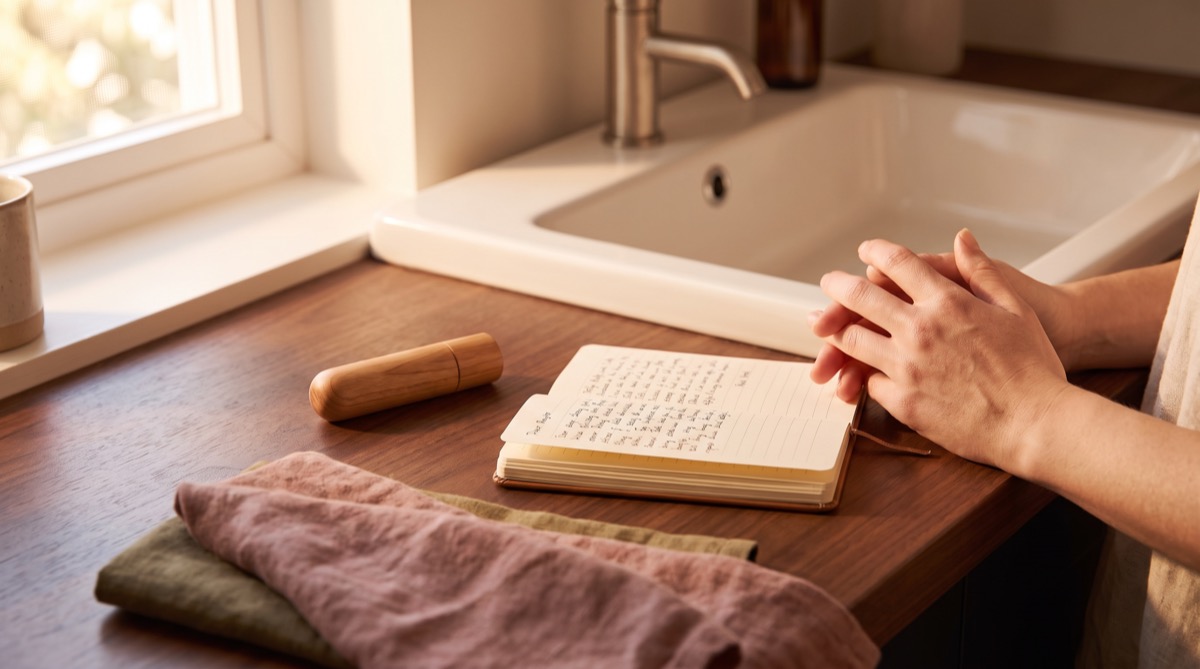
- Standing at the sink while water runs for a bath
- Sitting in the car before you walk into the house
- In the bathroom for 5 minutes with the door closed
- While waiting for a kettle or microwave
Five minutes is short enough that you will not skip it, and long enough to matter.
Does Aromatherapy Actually Reduce Stress, or Is It Just a Nice Smell?
It is more than a nice smell, though the nice smell helps too. A systematic review and meta analysis concluded aromatherapy can reduce stress in healthy adults, with multiple randomized trials showing significant improvements in self reported stress scores.
That does not mean a candle fixes burnout. It means a specific practice, done with intention and slow breathing, has measurable effects on how stressed people feel in the moment. Pairing scent with breath and a short prayer gives your nervous system and your spirit the same message at the same time: you can slow down now.
How Do I Do a 5 Minute Reset With a Personal Inhaler and Breath Prayer?
Here is the whole practice, start to finish. No special training required.
- Hold your personal inhaler about an inch from your nose, cap off.
- Breathe in slowly through your nose for a count of four.
- Hold for a count of two.
- Exhale slowly through your mouth for a count of six.
- Repeat this breath four times, inhaler in hand each time.
- Say a short breath prayer on the exhale, something like "Lord, renew me" or the line one of our own customers holds onto: "His mercies are new every morning. Great is thy faithfulness" (Lamentations 3:22-23, condensed).
- Cap the inhaler and go back to your day.
That is it. Five minutes, sometimes less. One caregiver who tested this told us she found comfort just cutting vegetables for dinner that same week, tired but at peace, because the smells reminded her of home. The reset does not have to be elaborate to work.
If you want a printed version of these steps to keep in a drawer or your bag, we built one into our free resource.
What Scents Work Best for Calming, Grounding, or Gentle Uplift?
Different moments call for different support. Here is a simple way to think about it.
| Goal | What it feels like you need | Common oils to consider |
|---|---|---|
| Calming | Slowing a racing mind before bed or a hard visit | Lavender, chamomile |
| Grounding | Steadying yourself mid-crisis or mid-shift | Cedarwood, vetiver |
| Gentle uplift | A soft boost without feeling wired | Rose geranium, sweet orange |
Rose geranium in particular has become a favorite among the caregivers we talk with. One customer described it as "sweet but not, and gentle yet uplifting, or maybe soothing, or maybe all of the above." That kind of layered, calm sweetness is exactly what a gentle uplift blend should do.
You can browse ready-made personal inhalers and blends built around these goals in our product shop.
How Can I Make This Safe in a Home With Seniors, Asthma, or Sensitivities?
Aromatherapy is a personal practice, not a household broadcast. What helps you can bother someone else in the same room. A few guardrails keep it that way.
- Use a personal inhaler, not a diffuser, in shared spaces. A capped inhaler releases scent only when you use it, so it will not fill a hallway or a sickroom.
- Ask before you diffuse anywhere else lives, especially seniors. Aging lungs and sensitive skin react differently than they used to.
- Never apply undiluted oil to skin, and patch test anything new. This matters more with asthma, eczema, or fragrance sensitivities in the house.
- Keep inhalers and bottles capped and out of reach of children and pets.
- Watch for a room that already smells like medicine or cleaning products. Adding scent on top of that is rarely a kindness.
A caregiver managing someone else's health already carries enough weight. Do not let a good tool become one more thing to apologize for.
When Should I Get Medical Guidance Before Using Essential Oils?
Personal inhalers used the way we described are a gentle, low-risk practice for most healthy adults. That said, there are moments to check with a professional first. Cleveland Clinic recommends talking with a healthcare provider who offers complementary and alternative medicine to learn proper aromatherapy techniques and safety considerations.
This matters most if you or the person you care for:
- Are pregnant or breastfeeding
- Have asthma, COPD, or another respiratory condition
- Are managing seizures or a neurological condition
- Take medications with known interactions
- Have very sensitive or broken skin
If any of that applies, bring your questions to a provider before you build a daily habit. Once you have the green light, the 5 minute reset is yours to keep.
A Practice You Can Actually Keep
Caregiving does not pause long enough for a perfect self-care routine, and you do not need one. You need something small enough to survive a hard week and repeatable enough to matter over months. A capped inhaler, four slow breaths, and a short prayer fits in a coat pocket and in five minutes.
If you want to try this alongside others walking the same road, we host occasional gatherings where caregivers share what is actually working. Check our events page for the next one, or book a session if you would rather build a personalized blend one on one.
You are allowed to breathe before you go back in. That is not selfishness. That is stewardship.
Want the next one in your inbox?
Join the list for a short note from Sandy most weeks, with one small ritual you can use.