Aromatherapy Safety for Caregivers and Seniors
# Aromatherapy Safety for Caregivers and Seniors
Yes, aromatherapy can be safe for caregivers and seniors, but shared air is the risk, not the oil itself. Diffusing into a room means everyone breathes it, including someone with asthma or a scent sensitivity who never agreed to it. A personal inhaler puts the choice, and the dose, in one person's hands. This post covers what to avoid, what to ask a clinician, and how to offer scent with consent instead of assumption.
Can essential oils irritate lungs or indoor air quality?
Yes, they can. The American Lung Association notes that essential oils and fragrance products can emit volatile organic compounds that may irritate airways, especially for people with asthma or respiratory issues. That is true even for oils marketed as "natural" or "pure." VOCs do not check labels before settling into someone's lungs.
This matters most in shared caregiving spaces. A living room, a bedroom, a car. If one person in that room has asthma, COPD, or is recovering from a respiratory illness, a diffuser running for hours is a different exposure than a few seconds of open air.
Why might a personal inhaler be safer than diffusing in shared rooms?
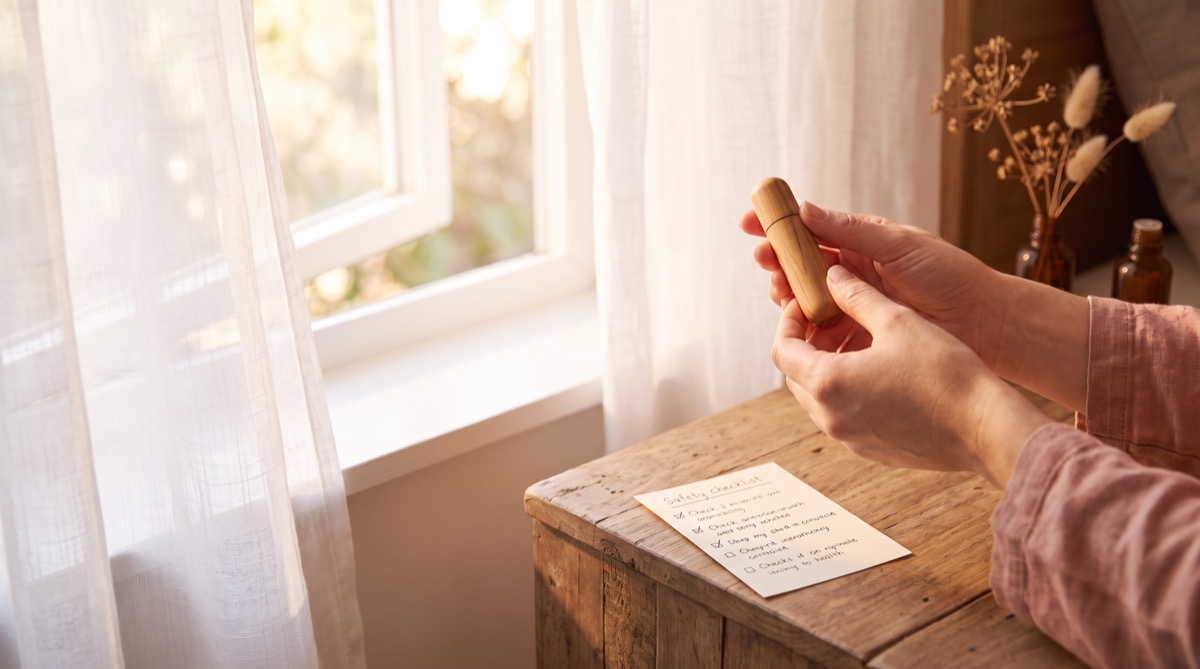
A personal inhaler is a capped tube, a wick, and a few drops of oil. It only releases scent when someone chooses to open it and breathe in, close to the nose, for a few seconds. Nobody else in the room inhales it unless they pick it up too.
Compare that to a diffuser running in a shared space:
- Diffuser: continuous release, affects everyone in the room, harder to control dose, lingers in fabric and air for hours.
- Personal inhaler: on-demand use, one person's exposure, capped between uses, easy to carry and put away.
- Roller or lotion: topical, localized to skin, no airborne exposure to others, but still requires a patch test first.
For caregivers managing a loved one with asthma, or for a household where sensitivities vary person to person, the inhaler format removes the guesswork. We cover exactly how to build and use one in our inhaler guide.
What are my safest starting rules for essential oils at home?
Start small and go slow. These are the rules we give every new caregiver client:
- One oil at a time. Introduce a single oil for at least a few days before adding another, so you know what caused any reaction.
- Dilute before skin contact. Never apply undiluted essential oil directly to skin, especially aging or fragile skin.
- Patch test first. A small dab on the inner forearm, wait 24 hours, check for redness or itching.
- Ventilate the room. Crack a window or door if you diffuse at all, and never diffuse in a closed room overnight.
- Ask before you scent someone else's space. What smells calming to you might be overwhelming or triggering to someone else.
- Keep bottles capped and labeled. Confusion around bottles is a real risk in households with memory changes.
These rules are not about fear. They are about giving scent the same respect you would give any product that affects breathing or skin.
When should I avoid essential oils around my loved one?
Some situations call for skipping essential oils entirely, at least until a clinician weighs in. Avoid use when:
- Your loved one has a diagnosed respiratory condition like asthma, COPD, or a recent lung infection and has not cleared aromatherapy with their doctor.
- They are on oxygen therapy (open flame and some oils near oxygen equipment carry their own separate risks worth discussing with their care team).
- They have known allergies to plants in the same family as the oil (citrus, mint, or ragweed-related plants, for example).
- They are pregnant or nursing, unless a knowledgeable provider has confirmed which oils are appropriate.
- They cannot verbally consent or express discomfort, such as during certain stages of dementia (more on this below).
- Skin is broken, irritated, or recovering from a procedure.
If any of these apply, hold off, or bring it up at the next medical appointment instead of guessing.
Is aromatherapy safe for dementia patients and caregiving settings?
It can be, but consent and individual response matter more here than almost anywhere else. Essential Three recommends personal inhalers or diffuser jewelry in dementia care guidance so individuals can access individualized calming aromas when anxious or confused. The key word is individualized. What soothes one person may distress another, and someone with dementia may not be able to tell you which is happening in the moment.
A consent-first approach looks like this:
- Offer, don't impose. Hold the capped inhaler near them and let them choose to lean in, rather than opening it near their face without warning.
- Watch the body, not just the words. Tension, pulling away, or agitation are a "no," even if verbal consent isn't possible.
- Keep it personal, not shared. An inhaler or a small piece of diffuser jewelry belongs to one person, so you are never guessing whether a scent in shared air is helping or harming someone else in the room.
- Reintroduce slowly after any negative reaction. Don't assume it was the oil; it might have been the moment, the smell intensity, or something unrelated.
This is part of why we build our tools around personal-use formats. A starter kit or inhaler set from our shop gives one caregiver, or one care recipient, full control over their own scent experience.
When should I consult a healthcare provider before using aromatherapy?
Before starting aromatherapy with someone in your care, especially someone with a chronic condition, on multiple medications, or in a fragile health state, loop in their healthcare team. Cleveland Clinic recommends talking with a healthcare provider who offers complementary and alternative medicine to learn proper techniques and safety considerations before starting aromatherapy at home. That conversation can catch interactions or contraindications you would not know to ask about otherwise.
Bring these questions to that appointment:
- Are there any oils that could interact with current medications?
- Does their respiratory or skin condition rule out certain oils entirely?
- Is inhalation, topical, or no aromatherapy the safer starting point?
- How should we introduce a new scent for the first time, and what should we watch for?
A five-minute conversation at a regular checkup can save weeks of trial and error, and it puts a second set of eyes on decisions that affect someone else's breathing and skin.
A simple way to start safely
If you are new to this and want a low-risk way to try it, start with our free starter guide, which walks through safe first steps before you buy anything. When you are ready for a guided setup, personalized to your household or care situation, you can book a consultation and we will help you build a plan around what is actually safe for the person you are caring for, not a generic list.
Aromatheromy at its best is quiet, personal, and consented to. Keep it in a capped inhaler, keep the room ventilated, and keep asking before you assume. That is the whole safety plan, and it works.
Want the next one in your inbox?
Join the list for a short note from Sandy most weeks, with one small ritual you can use.